It is very evident that things keep changing and evolving over long periods of time. The world of accessible skiing is no exception. A hundred years ago, a person in a wheelchair having the ability to ski was simply unheard of. It has been made possible for people with a wide range of disabilities to have the opportunity to experience the joy of skiing through revolutionary new pieces of technology. Inventions such as the sit ski and tethers help foster independence for participants, while also providing them with a new opportunity that they would not have had otherwise. Today we are going to take a deep dive exploration into the specifics and logistics of various equipment.
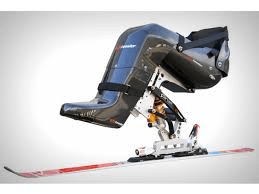
1. A Sit Ski : A sit ski is exactly what it sounds like, basically a pair of skis that you can sit down on. There are several variations of sit skis to cater to people with a wide variety of physical disabilities. For starters there are Bi-Skis, which are designed for beginner skiers with little to no motion in the lower body, and lack of upper body strength. This can include individuals with cerebral palsy, muscular dystrophy, or spina bifida (just to name a few). The Bi Ski consists of a seat with 2 wide skis at the bottom. These skis provide stability and when combined with 2 hand held outriggers, can be used completely independently by the athlete. There is another version of a sit-ski, a monoski. A mono-ski is designed for skiers who are a bit more advanced, and have good upper body strength. The mono ski is similar to the bi ski in the fact that they both use 2 hand held outriggers, but unlike the bi ski, the monoski only has one ski attached to the bottom. The monoski is a bit more challenging and requires the skier to have good balance. Good candidates for the monoski include those individuals who have had amputations in the lower body.
2. Long Pole : Much like the sit ski, a long pole is exactly what it sounds like. It is a long pole used to guide skiers with visual impairments or complete blindness. The long pole has no impact on the skis themselves (unlike most pieces of accessible ski equipment). Instead it is a bamboo pole, about 6 feet long. The skier will hold onto the middle of the pole in a horizontal direction, and 2 people (either a coach or experienced skier) hold on to either side of the pole. Imagine a three person horizontal sandwich. This enables the skier to have balance, have the ability to avoid collisions with other skiers, and be able to go in the correct directions. Long poles are amazing as they provide blind skiers with the ability to have a safe and fun time with others on the mountain.

3. Outriggers : Outriggers are complex pieces of equipment, but so crucial in promoting accessibility in the world of skiing. Outriggers are similar to poles in a way. They are like two crutches with skis attached to the bottom. They can be used in a variety of ways. They can be used with any of the sit skis, or even for stand up skis. They enable para skiers to have control on their speed, direction, and promote balance. On top of that, outriggers can be customized to fit the height of the athlete and adapted to fit the needs of the disability. It is truly awesome how beneficial they are!

As you can see, there are some really cool pieces of adaptive equipment out there. These are just a few
 Positive Altitudes
Leave a comment