If you are new here, check out part one first! Part one covered only a few of the many different equipment pieces used to make skiing more accessible. This is part 2 to cover some more! It is so amazing to see all this equipment used to make skiing more inclusive and accessible for all!!
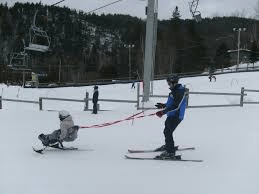
Tethers: Tethers have so many uses in skiing, and are truly a revolutionary piece of equipment. Many of you most likely have heard the term tether before, but let’s just refresh your memory. A tether is like a harness that is strapped to the back of a skier. It does not restrict movement or anything like that, but it allows the instructor to help control the direction of a skier, or a sit ski. This can be used for a wide range of disabilities, such as those with autism, or those with spinal cord injuries that ride a bi ski. On top of that, tethers also help those with epilepsy. Epilepsy is a medical condition in which one has many seizures. This can be very dangerous for a skier, if they are on a ski lift. A tether can be used to secure them to the lift, so in the case of a seizure, they do not fall off and sustain an injury.
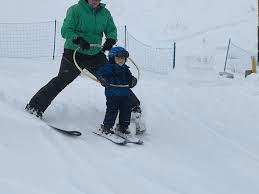
Hula Hoops: Yes, I know what you are thinking. Hula Hoops? The ones that I used to play with as a child? Yes, those hula hoops. Hula hoops are like a bit less extreme tether. It is used for more advanced skiers, who may occasionally need help changing directions. It is not safe to be used with sit skis, but is a great option for those with cognitive disabilities. Especially for children, hula hoops come in fun colors and can make skiing fun. The hula hoop is placed around the athlete, and the instructor (or other skier) holds on to the outside. Hula hoops do not allow the instructor to have full range of motion though, so it is important that the skier is able to overall make turns by themselves.
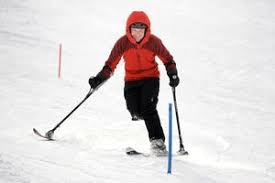
Three Track Skiing: While sit skiing can be a good option for those with amputations at times, those with only one amputation have the opportunity to be a three track skier. A three track skier is similar to a mono ski, but just standing up. The skier has one ski, and two outriggers on each side. It is called a three tracker, as the athlete has three contact points on the snow: one from each outrigger, and one from the ski itself. Three Track skiers must have a great deal of balance, as there is no seat and only one ski. It is a great option for those with disabilities who are advanced skiers (meaning they can comfortably do all blues and some blacks) and thrill seekers!
 Positive Altitudes
Leave a comment